In unpredictable situations, reliable backup power becomes essential. Understanding how to calculate backup power needs for emergencies can make a significant difference. Proper planning ensures that critical devices remain operational during power outages, which can happen during storms or other crises.
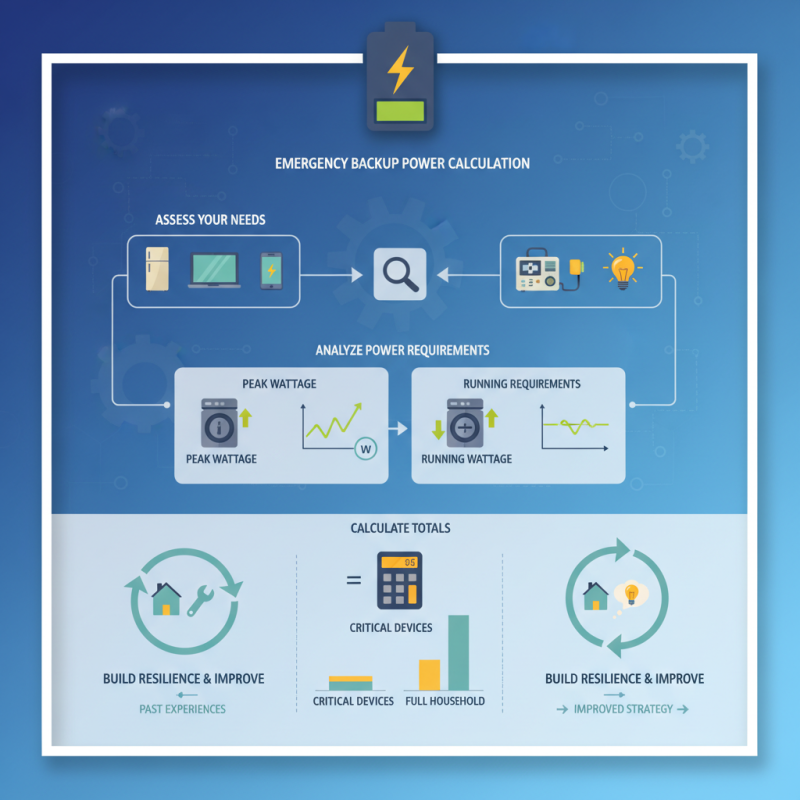
Analyzing your power requirements is vital. List appliances that need power and check their wattage. Consider peak and running wattages, as appliances often require more energy to start. Assess your household's unique needs. This may vary based on medical devices, refrigeration, or heating systems.
Calculating your backup power needs helps build resilience. It's a proactive measure against uncertainty. Start small, but don’t overlook critical devices. Reflect on past experiences to improve your strategy. This process may reveal gaps in your emergency plan, but that’s part of learning and improving.
Understanding Backup Power Basics and Importance
Backup power systems are essential during emergencies. Understanding their importance can save lives and preserve property. According to the U.S. Department of Energy, more than 60% of households lose power at least once a year. This statistic highlights the urgent need for backup power sources.
When assessing backup power needs, consider essential appliances. This includes refrigerators, medical equipment, and heating or cooling systems. The average refrigerator requires around 200 to 800 watts. Medical devices like oxygen concentrators can draw between 300 and 800 watts. Assessing these demands helps to properly size your generator.
Data from the Federal Emergency Management Agency (FEMA) indicates that without power, food can spoil within hours. Homes can heat or cool rapidly, becoming dangerous. In extreme cases, these situations can lead to severe health risks. Investing time to calculate your power needs can mitigate these dangers. Many people overlook this step, often leading to inadequate backup solutions.
Assessing Your Power Requirements for Essential Devices
Assessing your power requirements for essential devices is crucial during emergencies. Start by listing all devices you need, such as refrigerators, medical equipment, and communication tools. According to a report by the U.S. Department of Energy, a typical refrigerator requires about 100-800 watts to run. Medical devices can vary widely, with some needing up to 1,500 watts. Understanding these needs helps in choosing the right backup power system.
Tips: To estimate total power needs, calculate the wattage of each device. Consider how long you'll need each powered. Include both surge and running wattages. Many devices require more power when starting up. This can be as much as 3-5 times their running wattage.
Gathering this information is not always easy. Many people overlook smaller devices, like phone chargers. They may seem insignificant, but in totality, they can impact your backup plan. Aim to keep track of everything and revisit your calculations regularly.
Remember, efficiency matters. The Federal Energy Management Program suggests that ensuring devices are energy-efficient helps reduce overall power needs. The more precise you are, the better prepared you will be for any emergency situation.
Evaluating Time Duration for Emergency Power Needs
When evaluating time duration for emergency power needs, understanding your requirements is crucial. Consider the length of potential power outages. According to the U.S. Energy Information Administration, outages last on average about 8 hours. However, some events can lead to extended outages lasting days. Therefore, assessing your power needs over various durations is critical.
It’s essential to prioritize what needs power first. Essential devices, like refrigerators, medical equipment, or communication tools, need sufficient backup. A study by the Institute of Electrical and Electronics Engineers (IEEE) states that 70% of households require at least 2,000 watts for essential functions during outages. Knowing your wattage needs helps in selecting the right backup options.
Calculating how long each device will run on backup power is vital. For example, a 500-watt refrigerator could run for about 4 hours on a fully charged 2,000-watt generator. This provides a framework for evaluating your energy requirements critically. Reflecting on these calculations helps identify gaps and ensures preparedness for any emergency situation.
Calculating the Total Wattage Needed for Backup Systems
When calculating the total wattage needed for backup systems, first assess your essential devices. Identify what must stay powered during an outage. This may include refrigerators, medical equipment, or communication devices. Each device has its own wattage rating, usually found on a label or in the user manual. Gather this information to build a list.
Once you have a list, add up the wattage of all necessary equipment. Factor in a little extra capacity—around 20% more—to accommodate for any unexpected power spikes. This is crucial to ensure you don’t overload your backup system. Some devices may have starting wattage significantly higher than their operating wattage. So, be aware of these nuances.
Consider the type of fuel or energy source for your backup power. Different systems yield varying efficiencies. Generators typically have different outputs based on load and fuel type. This practical detail can impact your calculations. The process might feel tedious, but refining your needs leads to a robust plan. In emergencies, accurate calculations can make all the difference.
Choosing the Right Backup Power Solution for Your Situation
When assessing backup power needs, it's crucial to choose a solution tailored to your specific requirements. Different situations demand different approaches. According to a report from the National Renewable Energy Laboratory, about 40% of homeowners are unprepared for power outages. Understanding your power consumption is vital. Calculate the wattage of essential appliances and devices. This baseline will guide your power solution.
Portable generators are ideal for short-term outages. They are versatile and easy to store. However, for longer outages, a whole-home generator might be more effective. These systems can automatically kick in when the power goes out. Data from the U.S. Energy Information Administration indicates that the average U.S. household uses about 900 kWh per month. Matching your backup solution to your average consumption can prevent frustration during emergencies.
Keep in mind the limitations of each power source. Generators require fuel. Solar solutions depend on sunlight, making them less reliable in certain conditions. Every situation has trade-offs. Understanding these can help you select wisely to ensure your family remains safe and powered during emergencies.
FAQS
: On average, power outages last about 8 hours, but some can extend for days.
Focus on essential devices, like refrigerators, medical equipment, and communication tools.
Identify essential devices and check their wattage ratings. Then, sum their power needs.
Adding around 20% accounts for unexpected power spikes and prevents overloading the system.
Different fuel types offer varying efficiencies, impacting overall performance and calculations.
Portable generators work well for short-term outages but may not suffice for longer durations.
Solar solutions rely on sunlight, making them less reliable during bad weather or night.
The average U.S. household uses about 900 kWh per month, crucial for backup planning.
Not knowing your power needs and being unprepared can lead to frustration during emergencies.
Regularly review and update your calculations and power needs to avoid future issues.
Conclusion
In the article titled "How to Calculate Backup Power Needs for Emergencies Efficiently," readers will gain a comprehensive understanding of the fundamental concepts and significance of backup power systems. The discussion begins with an overview of why reliable backup power is crucial during emergencies, emphasizing the importance of being prepared for unexpected power outages.
The article guides readers through the process of calculating backup power needs for emergencies by assessing the power requirements of essential devices, evaluating how long these devices will need to operate, and determining the total wattage necessary for an effective backup system. Finally, it offers insights on selecting the appropriate backup power solution tailored to individual circumstances, ensuring that families and businesses can stay prepared and safe during unforeseen events.

 Eco Sun Power