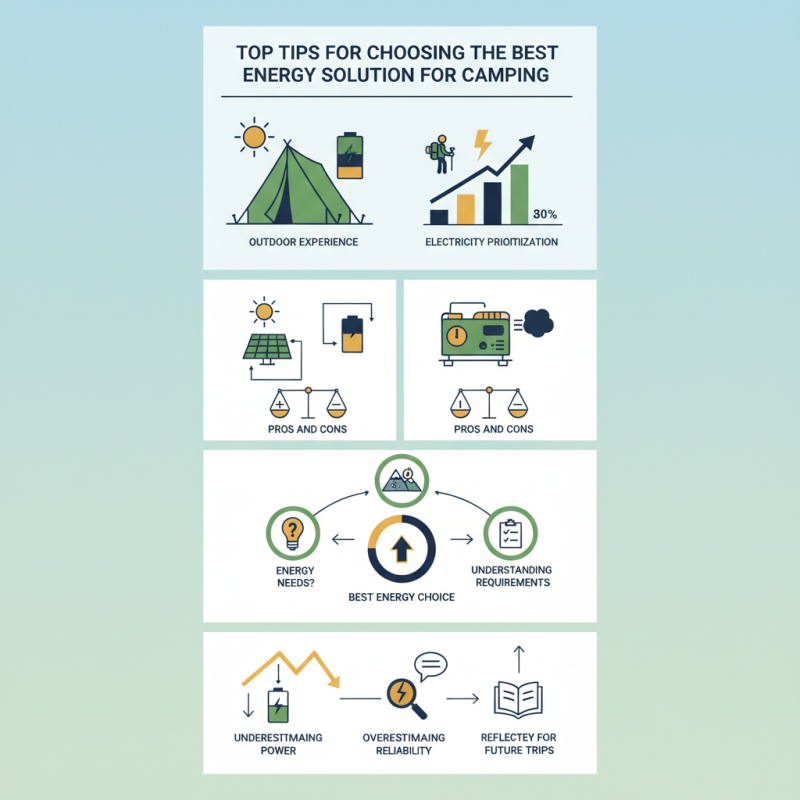
Choosing the right energy solution for camping can greatly enhance your outdoor experience. According to the Outdoor Industry Association, nearly 47 million Americans camp each year. This trend reflects a growing need for reliable and efficient energy sources. Understanding how to choose the right energy solution for camping is crucial for a successful trip.
Many campers struggle with power management. A recent study by the Camping and Caravanning Club found that 65% of campers prioritize access to electricity. However, the choices can be overwhelming. Options range from portable solar panels to traditional generators. Each option has its pros and cons. Selecting the one that fits your needs can be daunting.
It's essential to consider various factors. How much energy do you need? Will you be camping in a remote area? Understanding your requirements can lead to the best energy choice. Yet, even with research, mistakes happen. Some campers underestimate their power needs or overestimate the reliability of certain solutions. Reflecting on these experiences is vital for future trips.
Understanding Your Energy Needs for Camping
When camping, understanding your energy needs is crucial. Many campers underestimate how much power is necessary for their devices. Reports indicate that nearly 70% of campers rely on electronic devices. These include lights, cooking equipment, and charging personal gadgets. Knowing your specific needs can prevent discomfort during your trip.
Consider the types of activities you’ll engage in. Cooking requires different energy levels compared to using a smartphone. A portable solar panel may suffice for light charging, but heavier cooking appliances need more power. Research shows that about 40% of campers switch to gas-powered options for cooking to avoid running out of battery. Evaluating your itinerary helps prioritize energy use.
At the same time, don’t overlook backup options. Batteries or power banks can be lifesavers. According to industry data, over 30% of campers experience low battery issues. This can lead to frustration and discomfort. Reflecting on past camping trips can highlight areas for improvement and establish a better energy management plan. Each camping experience is an opportunity to learn and adapt your energy solution.
Types of Energy Solutions: Solar, Gas, and Battery Options
When selecting an energy solution for camping, understanding the types available is essential. Solar power is an eco-friendly choice. It’s quiet and requires minimal maintenance. According to a recent report, portable solar panels can generate up to 100 watts of power, enough for charging essential devices. However, their efficiency can drop in cloudy weather or in winter, which may limit their reliability.
Gas options, such as propane stoves, are highly effective for cooking. They heat quickly and are ideal for groups. However, safety is a concern. Gas leaks can be dangerous, especially in enclosed spaces. A study indicated that improper use leads to 10% of camping-related injuries. Campers must be cautious and ensure proper ventilation.
Battery-powered devices are convenient, providing consistent energy. Lithium-ion batteries are lightweight and can store a significant amount of power. Reports show they retain 80% of capacity after 500 charge cycles. Yet, they may drain faster than anticipated, especially when powering multiple devices. It’s crucial to manage usage smartly. Balancing these options will ensure a successful camping experience.
Top Tips for Choosing the Best Energy Solution for Camping
This chart compares three common energy solutions for camping: Solar, Gas, and Battery options. Each option is evaluated based on Cost, Efficiency (%), and Environmental Impact (rating from 1 to 10).
Assessing Portability and Weight for Easy Transportation
When choosing an energy solution for camping,
portability and weight are critical factors. According
to a report from the Outdoor Industry Association, 80% of campers prioritize
lightweight gear. This highlights the importance of selecting energy solutions that are easy
to carry and transport.
Portable power stations are a popular choice among campers. Many models weigh
under 30 pounds, making them manageable for short hikes. However, some users overlook the
fact that battery capacity varies significantly. An ideal power station should offer
at least 500 watt-hours for multiple devices. Balancing weight with power
capacity requires attention to detail.
Another aspect to consider is the type of energy source. Solar panels
can provide renewable energy, but they can be bulky. Flexible solar panels have emerged as a solution;
they are lightweight and easy to pack. However, they may not provide sufficient energy on
cloudy days. This inconsistency can lead to
frustration and may hinder outdoor activities that depend on reliable power. Making informed
choices about weight and portability is essential for a successful camping experience.
Evaluating Costs: Initial Investment vs. Long-Term Savings
When evaluating energy solutions for camping, understanding the costs is crucial. The initial investment often feels daunting. Solar panels, portable generators, and battery packs vary widely in price. Assessing how much you are willing to spend upfront is essential.
On the other hand, long-term savings can be quite significant. Consider the energy needed over multiple camping trips. A higher initial cost can lead to lower expenses over time. For instance, solar panels provide free energy after installation. Battery packs can be recharged using renewable sources, reducing reliance on fuel.
Sometimes, the value of convenience is overlooked. A generator may offer instant power, but fuel costs can add up. Relying on portable solar equipment might require planning and patience. It's important to weigh these factors carefully.
Each option has its pros and cons, which require reflection. Balancing upfront costs against future savings can lead to a more informed choice.
Safety Considerations When Choosing Energy Solutions for Camping
When selecting an energy solution for camping, safety must be a top priority. Battery-operated devices often come with a Limited Runtime Factor (LRF), indicating how long they can operate before requiring a recharge. According to a recent survey by the Outdoor Industry Association, about 40% of campers reported concerns regarding battery life during their trips. This points to the importance of planning and awareness of your energy needs.
Portable generators can offer substantial power but pose unique safety risks. These machines should always be operated outdoors due to carbon monoxide emissions. The Consumer Product Safety Commission reported numerous incidents caused by improper usage. Always read user guidelines thoroughly. Ensuring proper ventilation and distance from sleeping areas can mitigate risks significantly.
Solar-powered solutions continue to grow in popularity. They are often seen as safe and renewable. However, their efficiency relies on sunlight exposure. The U.S. Department of Energy suggests a varied energy strategy, blending solar panels with more traditional batteries can be wise. This mix allows for adaptability, especially when camping in heavily wooded areas where sunlight may be limited. It’s essential to recognize that every energy choice has pros and cons, and knowing these can help you camp safely and sustainably.
FAQS
: Portability is crucial because 80% of campers prefer lightweight gear for easy transportation during short hikes.
Look for models under 30 pounds. They should still offer at least 500 watt-hours for powering multiple devices.
Solar panels provide renewable energy but can be bulky. Flexible solar panels are lightweight but may underperform on cloudy days.
LRF indicates how long battery-operated devices can last before needing a recharge. Awareness is key for planning energy needs.
Portable generators emit carbon monoxide and should always be used outdoors. Proper ventilation is critical to avoid incidents.
Solar solutions depend on sunlight exposure. Combine solar power with traditional batteries for adaptability in wooded areas.
Yes, inconsistency in energy supply can lead to frustration. Planning and understanding your energy needs are vital for enjoyment.
Ignoring battery capacity can result in inadequate power for devices. Balancing weight and power is essential for successful trips.
Conclusion
When considering how to choose the right energy solution for camping, it's essential to first understand your specific energy needs based on the duration and nature of your trip. Different energy solutions such as solar panels, gas generators, and battery options offer various benefits that cater to different requirements and preferences. Solar energy is eco-friendly and sustainable, while gas solutions can provide immediate power, and battery options are often portable and easy to use.
Additionally, portability and weight are crucial factors to ensure easy transportation of your energy source. It's also important to evaluate the costs involved, weighing the initial investment against potential long-term savings. Lastly, safety should always be a consideration, as different energy sources come with their own risks. By thoroughly assessing these elements, campers can make informed decisions about the best energy solutions to meet their needs, enhancing their outdoor experience.

 Eco Sun Power