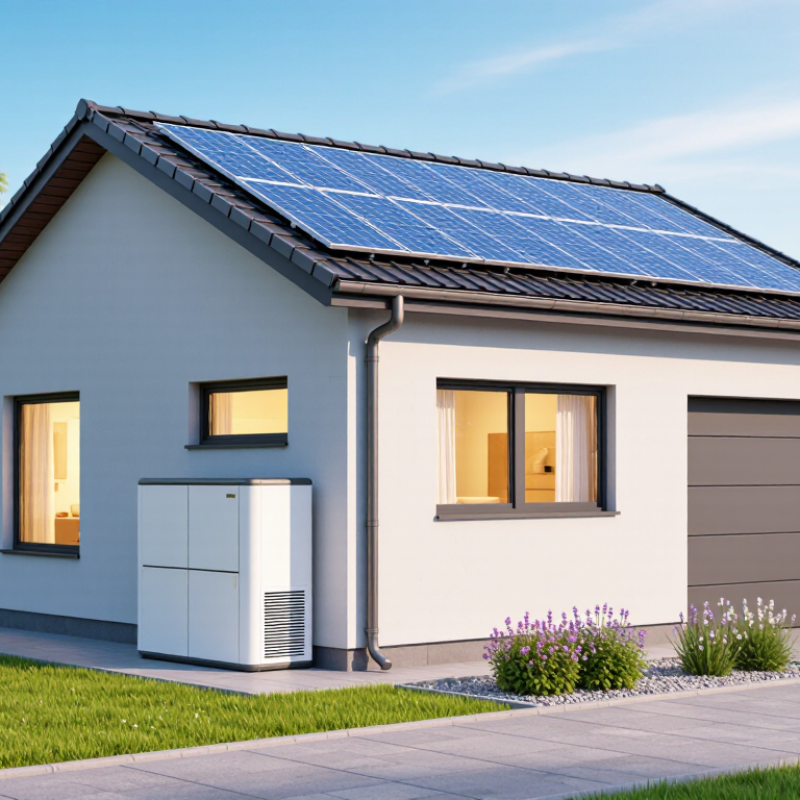
Small homes face a practical energy challenge: limited floor space, changing electricity prices, and uneven solar production. How to optimize energy storage for small homes requires more than choosing the largest battery. It means matching storage capacity with household demand, solar output, backup priorities, and local safety requirements. A compact system should fit beside a utility wall, garage, or outdoor cabinet without blocking ventilation or access.
The International Energy Agency’s Batteries and Secure Energy Transitions report (2024) estimates that global energy storage capacity must increase sixfold by 2030 to support clean electricity growth. That ambition reaches ordinary homes through smarter load management, flexible tariffs, and distributed batteries. The U.S. Energy Information Administration also reports continued growth in residential solar adoption, increasing the value of storing midday electricity for evening cooking, lighting, and heating.
Bigger is not always better.
Industry guidance from the U.S. Department of Energy emphasizes system performance, lifecycle cost, interoperability, and safety. In practice, homeowners should examine usable capacity, round-trip efficiency, warranty terms, degradation, and inverter compatibility. A 10 kWh battery may sound impressive, yet it can provide limited backup if high-power appliances run together. This guide explores right-sized storage, solar coordination, peak-demand control, monitoring, and future expansion. Some recommendations remain household-specific, and that uncertainty matters. A careful audit of one week’s electricity data can be more valuable than a generic calculator.
Start with real measurements, not guesses. Review twelve months of electricity bills and note seasonal changes. A winter heating system may consume more than lights, appliances, and electronics combined. Record essential loads, such as a refrigerator, router, medical equipment, circulation pump, and several LED lamps.
Measure each device’s wattage and daily running time. Multiply watts by hours to estimate daily energy use. Then add extra capacity for cloudy weather, battery losses, and unexpected demand. A small home might need only short evening support, while another needs backup during multi-day outages. These are different storage goals.
Be specific. Decide whether storage should reduce peak charges, provide emergency power, or increase self-consumption from solar generation. A qualified electrician can check wiring, load limits, ventilation, and local safety requirements. Keep critical circuits separate from nonessential loads when possible. That choice can make a modest system more useful.
My early estimates have often been too optimistic. People forget startup surges from pumps, freezers, or power tools. They also underestimate winter consumption. Leave a practical reserve, but avoid buying capacity that remains unused. Recheck the numbers after one month of operation, because household habits rarely match the original spreadsheet.
Review twelve months of electricity bills. Record seasonal changes, especially winter heating use. Measure each device’s wattage and daily running time. Real measurements beat guesses.
Identify essential circuits, such as refrigeration, internet equipment, medical equipment, circulation pumps, and LED lighting. Keep nonessential loads separate when possible. This makes limited storage more useful.
Multiply essential daily energy use by desired backup days. Then account for usable discharge limits and efficiency losses. For example, 8 kilowatt-hours of loads may need about 10 kilowatt-hours nominal capacity. Leave room for battery aging.
Oversized storage costs more and occupies valuable floor space. Unused capacity may provide little practical benefit. A smaller system can work better with carefully selected circuits.
Lithium iron phosphate batteries often provide good cycle life, stable operation, and useful energy density. Lead-acid systems may cost less initially, but they need more ventilation. The cheaper option is not always simpler.
Extreme heat or cold can reduce battery performance. Check temperature limits and enclosure ratings before installation. A garage may become very hot in summer or cold overnight. It happens.
People often count total capacity instead of usable capacity. They may also forget startup surges from pumps, freezers, or power tools. My early estimates were too optimistic. Recheck them after one month.
A qualified electrician should inspect wiring, load limits, ventilation, clearances, and emergency shutdown requirements. The battery, inverter, solar input, and transfer equipment must be compatible. Local safety requirements still matter.
How to optimize energy storage for small homes begins with understanding your household’s daily electricity needs, peak usage periods, backup priorities, and available budget. Once these goals are clear, choose a battery capacity that matches actual consumption rather than simply selecting the largest option. Consider storage technologies based on lifespan, safety, efficiency, installation requirements, and future expansion. If solar power is available, improve system performance by positioning panels effectively, reducing shading, and scheduling charging when generation is strongest.
Smart energy controls can further improve results by shifting flexible loads, prioritizing essential appliances, and limiting unnecessary consumption during high-demand periods. Regular monitoring helps identify unusual energy patterns, declining battery performance, or inefficient charging habits. Routine inspections, safe ventilation, professional installation, and timely software updates also support reliable operation. As household needs change, the system can be upgraded carefully through additional capacity, improved controls, or more efficient appliances, while always following local safety requirements and manufacturer guidance.

 Eco Sun Power