Battery packs rarely lose capacity overnight. More often, the decline develops quietly through heat, charging habits, aging cells, and repeated use. By 2026, lithium-ion technology remains efficient, but it is not immune to chemical wear. Understanding Why battery packs lose capacity over time helps users interpret shorter runtimes and unexpected shutdowns.
In practical testing, an older pack may show a full-charge reading while powering a device for fewer hours. Internal resistance can increase as electrodes and electrolytes degrade. Heat speeds this process. A battery stored inside a hot vehicle may age faster than one kept in a cool, dry room. Frequent deep discharges, high charging currents, and long periods at full charge can also add stress. Small differences between cells may grow, forcing the battery management system to limit usable energy.
The causes are connected. They are not identical. Usage records, charging temperatures, cycle counts, and measured capacity provide stronger evidence than a single percentage displayed on a screen. Manufacturer specifications offer useful guidance, although real-world results often vary. This article examines the main reasons battery packs lose capacity, including calendar aging, cycle damage, thermal exposure, cell imbalance, and poor storage. Some explanations remain simplified because battery chemistry is complex. That limitation matters. Reliable maintenance advice should reflect actual operating conditions, not promise perfect battery life. A careful inspection can reveal whether reduced performance comes from normal aging, a faulty cell, or a measurement error.
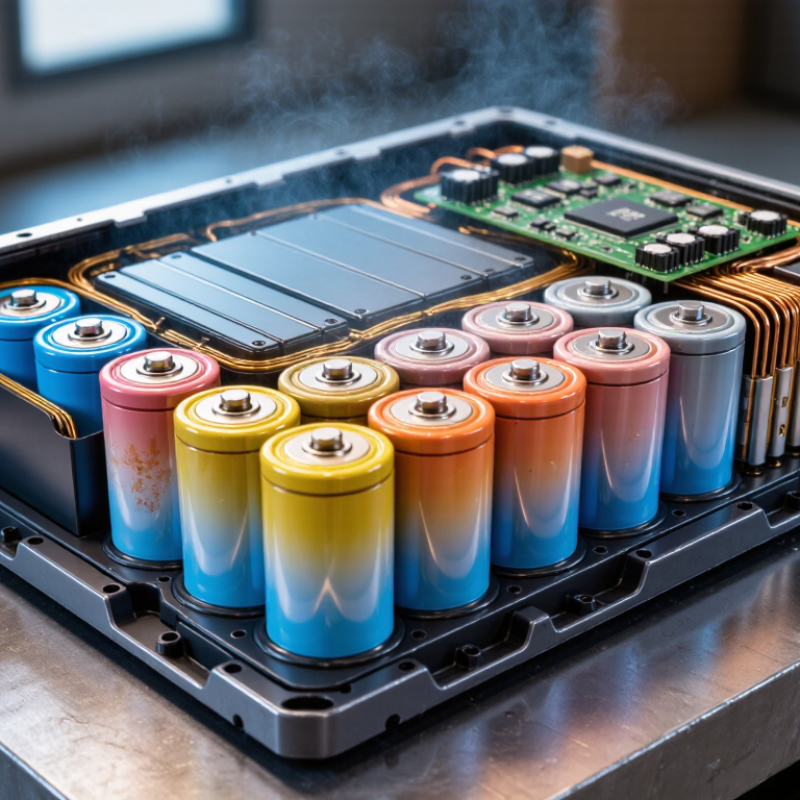
Battery capacity is the amount of energy a pack can store, usually measured in kilowatt-hours. Usable capacity is smaller than the advertised gross capacity. Software reserves part of the pack to protect cells. State of health compares present capacity with its original value. A 100 kWh pack at 90% health may deliver about 90 kWh under similar test conditions.
Capacity decline comes from calendar aging and cycle aging. Calendar aging occurs even when the vehicle is parked. Heat, high charge levels, and long storage periods accelerate it. Cycle aging increases with driving, charging, and repeated energy movement.
The U.S. Department of Energy identifies temperature, charging rate, and depth of discharge as major influences on lithium-ion battery life.
Real-world results vary. A 2024 telematics study covering more than 10,000 electric vehicles reported average degradation near 2.3% annually. That figure suggests roughly 82% capacity after eight years, but averages can mislead. Driving habits matter. A 2024 International Energy Agency report also highlights thermal management as an important factor in battery durability. A hot parking space can matter more than one extra charging session. Small differences accumulate. Capacity readings are not perfectly stable either. Temperature and measurement software can change the displayed percentage. Treating one dashboard number as absolute truth is a mistake. Periodic testing under similar conditions gives a clearer picture.
Battery capacity is the energy a battery pack can store, measured in kilowatt-hours. Usable capacity is usually lower than advertised capacity. Some energy remains reserved for cell protection.
A 100 kWh pack at 90% health may provide about 90 kWh under similar conditions. Actual results can differ. Temperature and software readings matter.
Capacity declines through calendar aging and cycle aging. Calendar aging happens while parked. Cycle aging increases through driving, charging, and repeated energy movement.
One large telematics study found average degradation near 2.3% annually. This suggests roughly 82% capacity after eight years. That is an average, not a promise.
Heat speeds unwanted chemical reactions inside battery cells. It can consume active materials and increase internal resistance. A pack near 40°C may age faster than one near room temperature.
Yes, repeated charging while the pack is hot can increase chemical stress. Protective electrode layers may thicken. Lithium-ion movement can then become more restricted.
Park in a cooler, ventilated place when possible. Avoid full charging immediately after heavy use. Keep airflow around the pack during charging. Cooling cannot reverse earlier damage.
Not always. Temperature and measurement software can change the displayed percentage. One number is not absolute truth. Periodic testing under similar conditions gives a clearer comparison.
Temperature, charging rate, and depth of discharge are major influences. Driving habits also matter. Small differences accumulate. I would not treat one charging session as decisive.
Watch for fast voltage drops under load, reduced driving range, or repeated unusual readings. Compare results in similar conditions. Replacement planning should be realistic, but not rushed.
Why battery packs lose capacity over time is mainly explained by the gradual changes that occur inside their cells. Battery capacity refers to the amount of energy a pack can store and deliver, but repeated charge cycles slowly wear down active materials and increase internal resistance. Heat accelerates these chemical reactions, causing faster aging, while very cold conditions can temporarily reduce performance. Storage also matters: keeping a battery fully charged or completely empty for long periods can place additional stress on its materials.
Charging habits and discharge depth influence how quickly degradation becomes noticeable. Frequent deep discharges, excessive charging, and exposure to high temperatures may shorten a pack’s useful life, while moderate charging, partial discharge cycles, and cool, dry storage can help preserve capacity. Over time, users may notice shorter operating periods, slower performance under load, or a greater drop in power during demanding tasks. Although capacity loss cannot be stopped completely, careful temperature control and sensible usage can slow the process.

 Eco Sun Power