When considering why solar panels don’t charge efficiently indoors, it’s essential to understand several underlying factors. Dr. Emily Hart, a solar energy expert, emphasizes, “Solar panels need direct sunlight to function optimally.” This statement underlines the primary challenge indoor solar installations face.
Indoor environments typically offer limited sunlight exposure. This significantly decreases a solar panel's energy production. Even the best panels require bright, unobstructed light to work effectively. Furthermore, artificial lighting is not a suitable substitute. It lacks the intensity needed for optimal performance.
Another important factor is positioning. Solar panels must be oriented correctly to capture sunlight. Indoors, this becomes difficult, leading to subpar performance. Some individuals may overlook their power needs, assuming that indoor setups will suffice. This misconception can lead to frustration. Understanding these limitations helps consumers make informed decisions about solar technology.
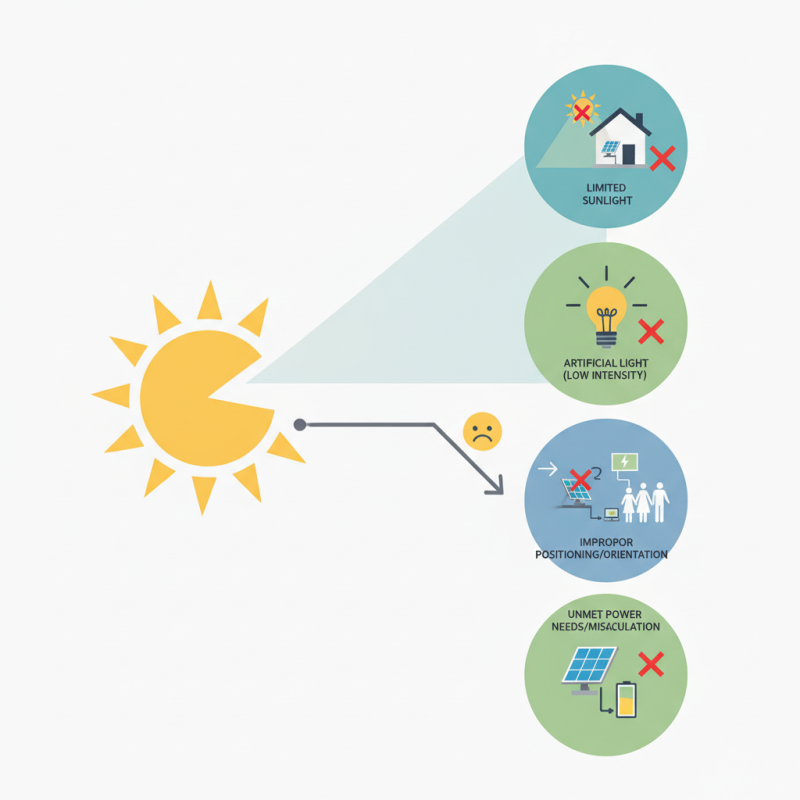
Solar panels rely heavily on light intensity for efficient performance. When installed indoors, they face significant challenges. Studies indicate that solar panel efficiency drops by more than 70% under artificial lighting compared to direct sunlight. This discrepancy arises because typical indoor lights, such as LEDs or fluorescents, emit much lower light intensity than natural sunlight.
The intensity of light required for optimal solar panel performance generally exceeds 1000 watts per square meter. Indoor environments rarely meet this threshold. For instance, conventional fluorescent lights typically provide only 15-40 watts per square meter. Moreover, the angle and distance from the light source further impact energy conversion rates. Panels positioned far from light sources experience even lower efficiencies.
The results may leave many questioning the viability of solar panels indoors. A study by the National Renewable Energy Laboratory found that household applications, reliant on natural light, performed much better than setups under artificial light. This raises critical reflections on location and design for solar installations, especially within urban settings. Even with technological advancements, current solar technology still demands a conducive outdoor environment for optimal energy capture.
| Reason | Impact on Efficiency (%) | Description |
|---|---|---|
| Low Light Intensity | 20 | Insufficient sunlight reduces overall energy production. |
| Obstructions | 30 | Items blocking the panels hinder light absorption. |
| Angle of Panels | 15 | Incorrect positioning leads to suboptimal light capture. |
| Dirty Surfaces | 10 | Dust and grime can significantly reduce efficiency. |
| Temperature Variations | 25 | High indoor temperatures can impact performance negatively. |
| Short Daylight Hours | 40 | Limited sunlight in winter months affects charging. |
| Poor Quality Panels | 50 | Low-grade materials lead to reduced efficiency. |
| Panel Age | 35 | Older panels may not perform at peak capacity. |
| Wiring Issues | 20 | Faulty wiring can obstruct power flow. |
| Mismatch of Components | 22 | Improperly matched components can reduce efficiency. |
: Solar panel efficiency drops by over 70% under artificial lighting compared to direct sunlight.
Solar panels require more than 1000 watts per square meter for optimal performance.
Conventional indoor lights, like fluorescents, offer only 15-40 watts per square meter.
The angle and distance from the light source impact energy conversion rates significantly.
Furniture, walls, and window obstructions reduce sunlight exposure for indoor panels.
Yes, cooler indoor temperatures can hinder solar panels' energy conversion capabilities.
High humidity levels may decrease the efficiency of solar cells significantly.
Many assume that receiving some light guarantees efficient charging, which is incorrect.
Understanding limitations can lead to better decisions on where to install solar panels.
Indoor panels often fall short in energy generation due to reduced light intensity and environmental factors.
The article "Top 10 Reasons Why Solar Panels Don’t Charge Well Indoors" explores several critical factors affecting the efficiency of solar panels when used in indoor settings. One major aspect discussed is the impact of light intensity on solar panel performance; indoor lighting typically provides significantly less intensity compared to direct sunlight, resulting in decreased charging capacity. Additionally, comparisons between indoor and outdoor performance metrics reveal stark differences, often highlighting the limitations of indoor installations.
The presence of dust and debris on panels can further hinder functionality, compound the issues associated with reduced light exposure, and play a role in overall efficiency. Additionally, temperature fluctuations commonly encountered indoors can affect the electronics within the panels, adversely impacting their charging capacity. Collectively, these elements contribute to the overarching question: Why solar panels don’t charge efficiently indoors, underscoring the challenges faced in maximizing solar energy utilization in less-than-ideal conditions.

 Eco Sun Power