Portable chargers have become essential accessories in our tech-driven lives, but overheating remains a significant concern. Experts in the field, such as Dr. Alice Green, a battery technology specialist, highlight the severity of this issue. She emphasizes, "Understanding why some portable chargers overheat can help users choose safer options."
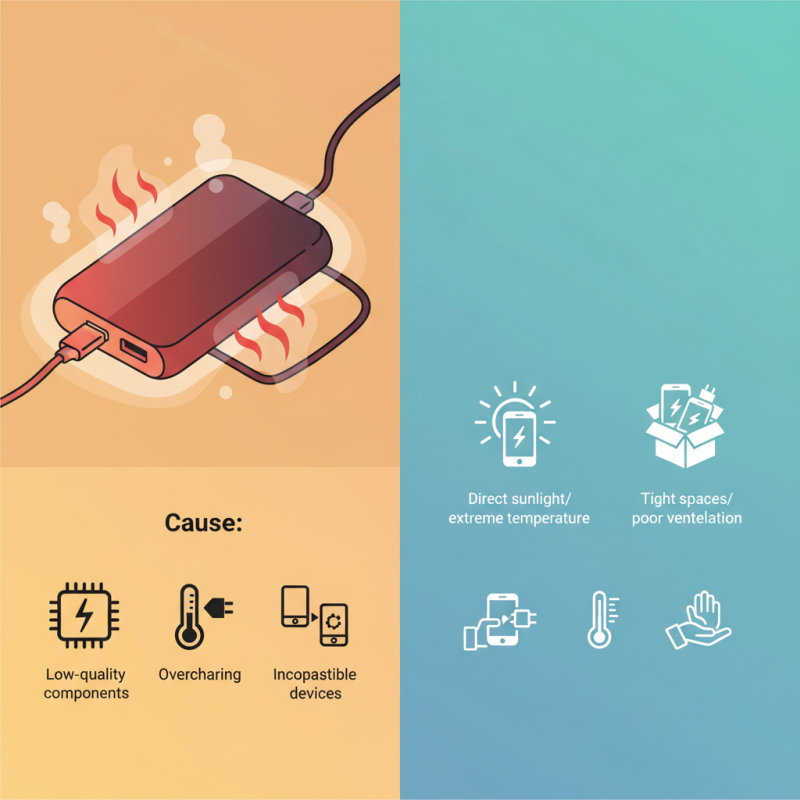
Many factors contribute to this overheating problem. For instance, low-quality components or poor design can lead to excess heat generation. Additionally, high temperatures can result from overcharging or using devices incompatible with the charger. Often, users overlook the importance of matching their devices with the right chargers. They might not realize the potential risks involved.
It’s not just the charger; the environment plays a role too. Extreme temperatures, whether from direct sunlight or tight spaces, can amplify the heating effects. Even well-designed chargers can falter under specific conditions. Users need to reflect on their charging habits and environments to prevent issues. As we explore the question, "Why do some portable chargers overheat," it’s clear that awareness is the first step toward safer charging practices.
Portable chargers, or power banks, are essential for our on-the-go lifestyle. Understanding how they work can help us avoid issues like overheating. At the core of a portable charger is a battery, typically lithium-ion or lithium-polymer. These batteries store electrical energy and convert it to power your devices. However, their energy density can sometimes lead to excess heat during charging cycles.
Heat generation occurs for several reasons. Increased current flow, poor ventilation, and low-quality components can all contribute. When a device is charged rapidly, the battery may struggle to dissipate heat effectively. This can create a dangerous cycle, causing the charger to overheat. Users often overlook compatibility between the charger and the device. Mismatched output requirements can strain the power bank further.
Not all portable chargers are made equal. Inexpensive models may cut corners, leading to poor thermal management. Users should consider purchasing from reputable manufacturers that meet safety standards. It's also wise to watch for signs of overheating, such as unusual warmth or smells. Regularly checking chargers and ensuring they are used in well-ventilated areas can prevent accidents.
Portable chargers are essential for our on-the-go lifestyle. However, overheating can be a common issue. Understanding the common causes is crucial for safe usage.
One significant reason for overheating is excessive charging. When a portable charger is plugged in for too long, it can generate heat. This often happens when users forget to unplug their device after it's fully charged. Another cause can be poor-quality materials. Using substandard components can lead to inefficient energy transfer, resulting in heat accumulation. Additionally, using a charger in a hot environment can contribute to overheating.
Tips: To prevent overheating, always unplug your charger once your device is fully charged. Choose reputable brands with quality certifications. Also, avoid direct sunlight or hot surfaces while charging. These small adjustments can make a big difference.
Overheating can result in battery damage. It may even reduce the overall lifespan of your charger. Users might overlook the importance of temperature regulation. Ignoring this issue can lead to unexpected failures. Be aware of the signs, like unusually hot surfaces or unusual noises, while charging.
Portable chargers are essential, but overheating can be a concern. Various environmental factors contribute to this issue. High temperatures are one of the main culprits. When the surrounding temperature exceeds 30°C (86°F), the internal components work harder, leading to overheating. Humidity plays a role too. High humidity can reduce the efficiency of battery cooling mechanisms. A report from the International Energy Agency suggests that optimal charging occurs between 10°C and 30°C.
Direct sunlight can significantly elevate a charger's temperature. Leaving a charger in a hot car or on a sunlit table can lead to rapid heat buildup. If left unchecked, this can damage the battery and reduce its lifespan. Research indicates that chargers can lose up to 20% of their efficiency at temperatures above 40°C (104°F).
To prevent overheating, avoid charging in direct sunlight or confined spaces. Keep your charger in a well-ventilated area. Regularly inspect for physical damage or swelling, which can signal overheating issues. It's essential to monitor the temperature during use. Stop charging if it feels too hot to touch. This proactive approach can enhance the safety and longevity of your device.
Portable chargers are essential for modern devices. However, overheating during use is a common concern. According to a report by the International Electrotechnical Commission, overheating issues can arise when chargers lack adequate safety features. These features are designed to maintain optimal temperature and prevent hazards.
One of the critical safety mechanisms in many chargers is thermal management. This involves built-in temperature sensors that monitor heat levels. If the charger exceeds a certain temperature, it automatically shuts down. Research from the Consumer Technology Association indicates that effective thermal management can reduce overheating risks by up to 60%. Users should be aware of this feature when choosing a charger.
Another important aspect is short-circuit protection. This feature prevents electrical surges that can lead to overheating. It works by disconnecting the power supply when a short-circuit is detected. Despite these advancements, not all chargers implement these safety features effectively. An industry survey revealed that nearly 30% of portable chargers on the market still lack proper safety certifications. Awareness of these safety features can guide consumers in selecting reliable chargers.
Portable chargers are convenient but can overheat during use. This is often due to poor ventilation or excessive energy output. To prevent overheating, it is crucial to ensure good airflow around the charger. Avoid using it while it’s charging or placing it on soft surfaces like beds or couches.
Another common issue is overloading the charger. Using devices that draw too much power can lead to overheating. Stick to the recommended power limits indicated on the charger. Monitor the temperature. If it feels excessively hot, disconnect it immediately. This simple step can prevent potential damage.
Regular maintenance also matters. Keep the charger clean and free from dust. Dust can block vents and trap heat. Carrying the charger in a well-ventilated location is beneficial. The material and design can also affect its cooling efficiency. Being mindful of these aspects can enhance safety. It's important to reflect on your usage habits. How often do you check for overheating? Awareness is key.
This chart demonstrates the temperature readings of various portable chargers during use. Charger B and Charger D exhibited the highest temperatures, which could indicate possible overheating issues. Monitoring these temperatures is critical to ensure safe usage and prevent damages.
: Portable chargers, or power banks, store electrical energy to power devices on the go.
Overheating can occur due to high current flow, poor ventilation, or low-quality components.
Ensure good airflow, avoid using it on soft surfaces, and monitor its temperature regularly.
Look for thermal management and short-circuit protection to help avoid overheating risks.
Check for safety certifications and be aware of unusual warmth or smells.
Yes, using devices that draw too much power can lead to overheating. Stick to recommended limits.
Regular checks for overheating signs can prevent accidents. Reflect on your usage habits.
Dust can block vents, trap heat, and affect cooling efficiency. Keep it clean.
Not all chargers implement thermal management well. Research before buying.
Reputable brands often meet safety standards and provide better thermal management features.
In the exploration of why do some portable chargers overheat, it is essential to understand the basic components and functions of these devices. Overheating can often stem from common causes such as excessive usage, internal short circuits, or poor quality materials. Additionally, environmental factors, including high ambient temperatures and inadequate ventilation, can significantly contribute to the overheating of chargers.
To mitigate these risks, many portable chargers are equipped with safety features designed to prevent overheating, such as thermal protection circuits. Furthermore, users can follow best practices for safe usage, which include avoiding extreme temperatures and not overloading the charger. By paying attention to these aspects, users can enhance the safety and longevity of their portable charging devices while minimizing the chances of overheating.

Eco Sun Power