Why Do Solar Lights Stop Working After a Few Months?

Time:2026-05-28 Author:Amelia
0%

Solar lights are a popular choice for energy-efficient outdoor lighting. However, many users face a common issue: Why solar lights stop working after a few months? This question touches on various factors that influence the longevity and effectiveness of solar-powered products.

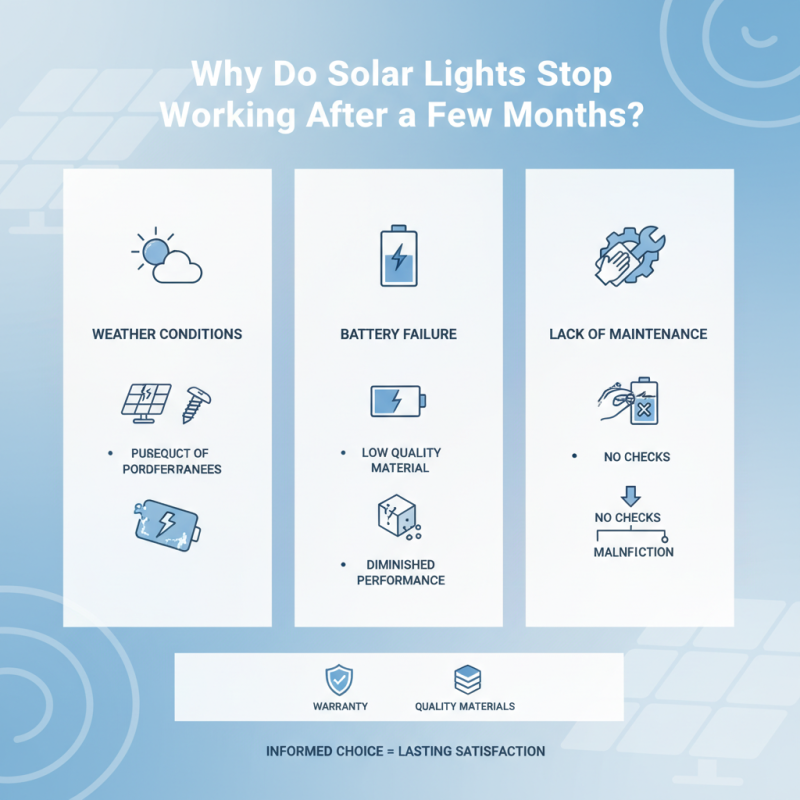
Solar lights draw energy from sunlight using photovoltaic cells. Despite their convenience, several components can cause malfunctions. Poor weather conditions can degrade parts over time. Battery failures, often due to low-quality materials, may result in diminished performance.

Understanding why solar lights fail can save consumers from frustration. Some might even purchase replacements without addressing root causes. A reliable product requires proper maintenance and quality checks. Users should explore options with warranties and superior materials. Ultimately, being informed about solar light mechanics enhances user satisfaction.
Why Do Solar Lights Stop Working After a Few Months?

Common Reasons Solar Lights Fail After a Few Months

Solar lights are an attractive and eco-friendly option for outdoor lighting. However, many users find that their solar lights stop working after just a few months. Understanding the common reasons behind this can help improve their longevity.

One major reason for failure is inadequate sunlight exposure. If installed in shady areas, solar panels may not gather enough energy. This leads to dim lights or complete failure. Keep the panels clean and ensure they face direct sunlight. Dust, dirt, or snow accumulation can block sunlight. Another factor is the quality of the battery. Low-quality batteries tend to degrade quickly. These batteries may not hold the charge, resulting in unreliable performance.

Environmental factors also play a role. Extreme weather conditions can damage solar lights. Heavy rain or strong winds may affect their durability. Users often overlook this aspect when purchasing solar lights. Sometimes, even a poorly designed product can lead to early failure. Regular maintenance and attention to placement can significantly impact the lifespan of solar lights.

Impact of Weather Conditions on Solar Light Longevity

Weather conditions significantly affect the lifespan of solar lights. Extreme temperatures, both hot and cold, can cause operational issues. For instance, excessive heat can damage the internal components. On the other hand, freezing temperatures can lead to battery failure. Different climates pose unique challenges for solar lighting systems.

Rain and humidity also play a crucial role. While many solar lights are designed to be weather-resistant, prolonged exposure to moisture can still cause degradation. Water may seep into the casing, affecting the circuitry. Even slight leaks can start a chain reaction of failures in the system. It’s not uncommon for lights to stop working after just a few months due to these environmental factors.

Moreover, sunlight availability directly impacts performance. Areas with frequent cloudy days will see diminished charging. If the solar panels don’t receive enough sunlight, the batteries may not fully charge. This inefficiency can shorten the overall lifespan of the lights. Regular maintenance can help, but not all users prioritize this, leading to premature failures.

Impact of Weather Conditions on Solar Light Longevity

Importance of Quality in Solar Light Components

Solar lights can be a brilliant addition to outdoor spaces, but many users face a common disappointment: they stop working after just a few months. The core of this issue often lies in the quality of components used in these lights. Poor-quality solar panels, batteries, and LEDs significantly impact longevity. Research indicates that up to 30% of solar lights fail within the first year due to inferior materials.

The solar panel is a crucial part. Low-quality panels exhibit reduced charging efficiency. This can leave batteries undercharged. Reports show that high-efficiency panels can increase light lifespan by over 50%. Similarly, batteries made from lower-quality materials tend to degrade quickly. They hold less charge and fail sooner than better alternatives. According to a study by the Solar Energy Industries Association, premium batteries can last up to five years, while cheaper ones may only last a few months.

LED quality also plays a significant role. Cheaply manufactured LEDs can burn out in weeks, while quality LEDs can last decades. Investing in better components leads to significant long-term savings. However, many consumers overlook this when purchasing solar lights, often driven by price alone. Industry experts advise taking the time to research products. This may mean paying more upfront for a system that won’t fail when it’s needed most.

Maintenance Tips to Extend the Life of Solar Lights

Maintaining solar lights effectively can significantly extend their lifespan. Various studies indicate that improper maintenance leads to issues like battery failure and reduced efficiency. According to a report by the Solar Energy Industries Association, about 30% of solar light users experience decreased performance within the first year due to neglect.


Regular cleaning is essential. Dust and debris can accumulate on solar panels, blocking sunlight and reducing energy absorption. A simple wipe every couple of weeks can enhance energy intake by up to 20%. Additionally, monitoring the battery health is crucial. Many solar lights use rechargeable batteries that need replacing after about 1-2 years. Neglecting to do so can lead to complete failure.


Positioning solar lights wisely also plays a role. Areas with heavy shade can hinder performance. Consider repositioning if lights are not receiving enough sunlight. Even with proper care, issues arise. Sometimes, components wear out unexpectedly. Understanding these details can help maintain solar lights for years, benefiting both efficiency and cost savings.

Understanding Battery Life and Replacement Needs in Solar Lights

Solar lights are a popular choice for outdoor illumination. However, many users find that these lights stop working after a few months. A primary reason for this issue lies in the batteries used in solar lights. Understanding the lifespan and maintenance of these batteries is crucial for prolonged functionality.

Most solar lights are equipped with rechargeable batteries, commonly nickel-metal hydride or lithium-ion. These batteries typically have a life span of one to three years. Environmental factors such as weather changes can impact their performance. For example, prolonged exposure to extreme temperatures can degrade battery life. Regularly inspecting and replacing the battery can prevent unexpected outages. The visibility of individual cells can also indicate battery health; any signs of corrosion warrant immediate attention.

Another aspect to consider is the sunlight exposure received by solar panels. If panels are obstructed, they may not charge the batteries adequately. Users should place solar lights in areas receiving ample sun. Poor positioning can lead to repeated charges and discharges, weakening the battery. Owning solar lights entails a commitment to regular check-ups and maintenance for optimal performance. Don't overlook these elements; your lights might thank you with longer service life.

Why Do Solar Lights Stop Working After a Few Months? - Understanding Battery Life and Replacement Needs in Solar Lights

Issue Description Solution Recommended Replacement Period
Battery Degradation Batteries lose capacity over time and may not hold a charge. Replace batteries with compatible solar rechargeable batteries. Every 1-2 years
Solar Panel Issues Dirt and debris can block sunlight from the solar panel. Clean the solar panel regularly and ensure it’s in a sunny location. As needed (typically every 6 months)
Poor Quality Components Low-quality materials can fail prematurely. Invest in solar lights with better reviews and warranties. N/A; consider a replacement
Fixture and Design Flaws Bad designs can lead to water ingress and corrosion. Inspect fixtures for damage and replace if necessary. N/A; consider a higher quality fixture
Extreme Weather Conditions Harsh weather can damage components of solar lights. Store lights in a safe place during extreme weather. Inspect before and after each season

FAQS

: What weather conditions affect solar light longevity?

: Extreme temperatures impact solar light operation. Hot weather can damage components, while cold can cause battery issues.

How do rain and humidity affect solar lights?

Prolonged moisture exposure can degrade solar lights. Water intrusion may damage circuitry, leading to failures over time.

How does sunlight availability influence solar lights?

Solar lights need direct sunlight to function well. Frequent cloudy days can prevent panels from fully charging batteries.

Why do many solar lights fail within the first year?

Poor-quality components, like solar panels and batteries, contribute to early failures. Up to 30% may stop working quickly.

How can battery maintenance extend solar light lifespan?

Regularly checking and replacing batteries is essential. Environmental factors can degrade performance and cause unexpected outages.

What type of batteries do solar lights typically use?

Most solar lights use nickel-metal hydride or lithium-ion batteries. Their lifespan is generally one to three years.

What happens if solar panel placement is poor?

Poor positioning can obstruct sunlight. This may lead to inadequate battery charging and can weaken battery life over time.

How can the quality of LEDs affect solar light functionality?

Cheap LEDs tend to burn out quickly, while quality ones can last for decades. Investing in better LEDs pays off in the long run.

What are the signs of battery degradation in solar lights?

Corrosion or decreased charging ability can indicate battery issues. Regular inspections can help detect and address these problems.

What is a common user oversight when buying solar lights?

Many consumers focus only on price. This can lead to overlooking potential quality, which is crucial for longevity.

Conclusion

The article "Why Do Solar Lights Stop Working After a Few Months?" explores various factors contributing to the premature failure of solar lights. Common reasons include inadequate sunlight exposure, poor-quality components, and adverse weather conditions that can significantly affect performance. The analysis also highlights the essential role of battery life, suggesting that understanding replacement needs is crucial for maintaining functionality.

To extend the lifespan of solar lights, regular maintenance is recommended. This includes cleaning the solar panels to ensure optimal sunlight absorption and checking for any physical damage that might compromise their effectiveness. By considering these aspects, users can mitigate the reasons behind why solar lights stop working after a few months, ultimately enhancing their longevity and reliability.

Amelia

Amelia

Amelia is a seasoned marketing professional with a wealth of expertise in our company’s core offerings. With an unwavering passion for driving growth and innovation, she plays a pivotal role in shaping our marketing strategies and enhancing brand visibility. A key aspect of her responsibilities......